
Custom CRMs · Internal tools

You outgrew the spreadsheet two years ago.

The spreadsheet three people edit at once. The WhatsApp thread that holds the only record of a job. The HubSpot, Jobber or Monday subscription you pay for in full and use a corner of. I replace them with one system, built around the way your business actually runs and owned outright by you.

20 minutes. You leave with a clear view of what to build first, whether you hire me or not.

The shape of the thing

What one of these systems looks like.

Drawn as illustrations rather than screenshots. No client has agreed to have their live system published here, so nothing on this page pretends to be one. The real builds get screen shared on the call.

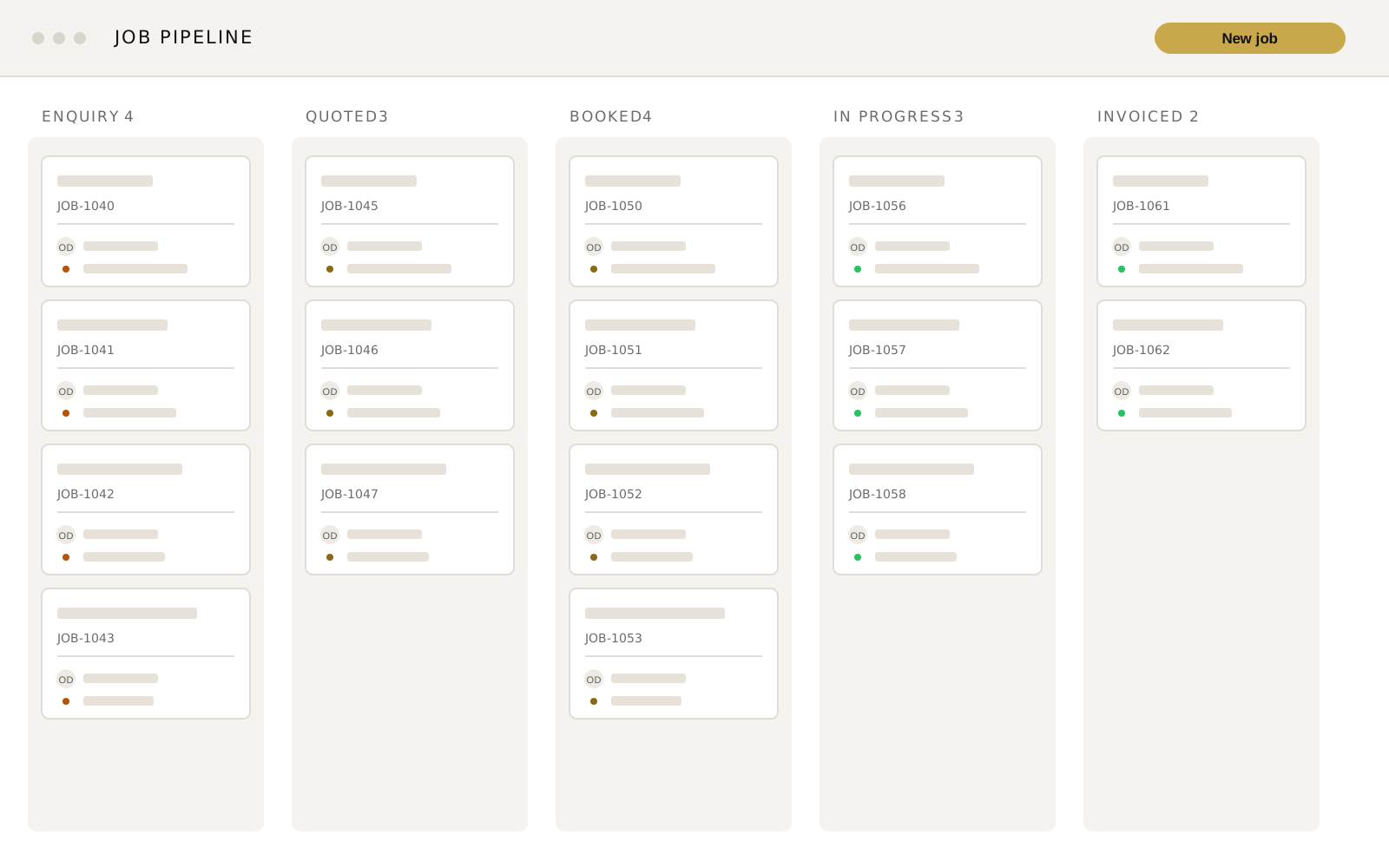
Illustration of a custom CRM pipeline: jobs moving through columns from enquiry to invoiced, each card carrying an owner and a next action
CRM · Pipeline view Every live job on one board. Who owns it, what happens next and how long it has been sitting there.
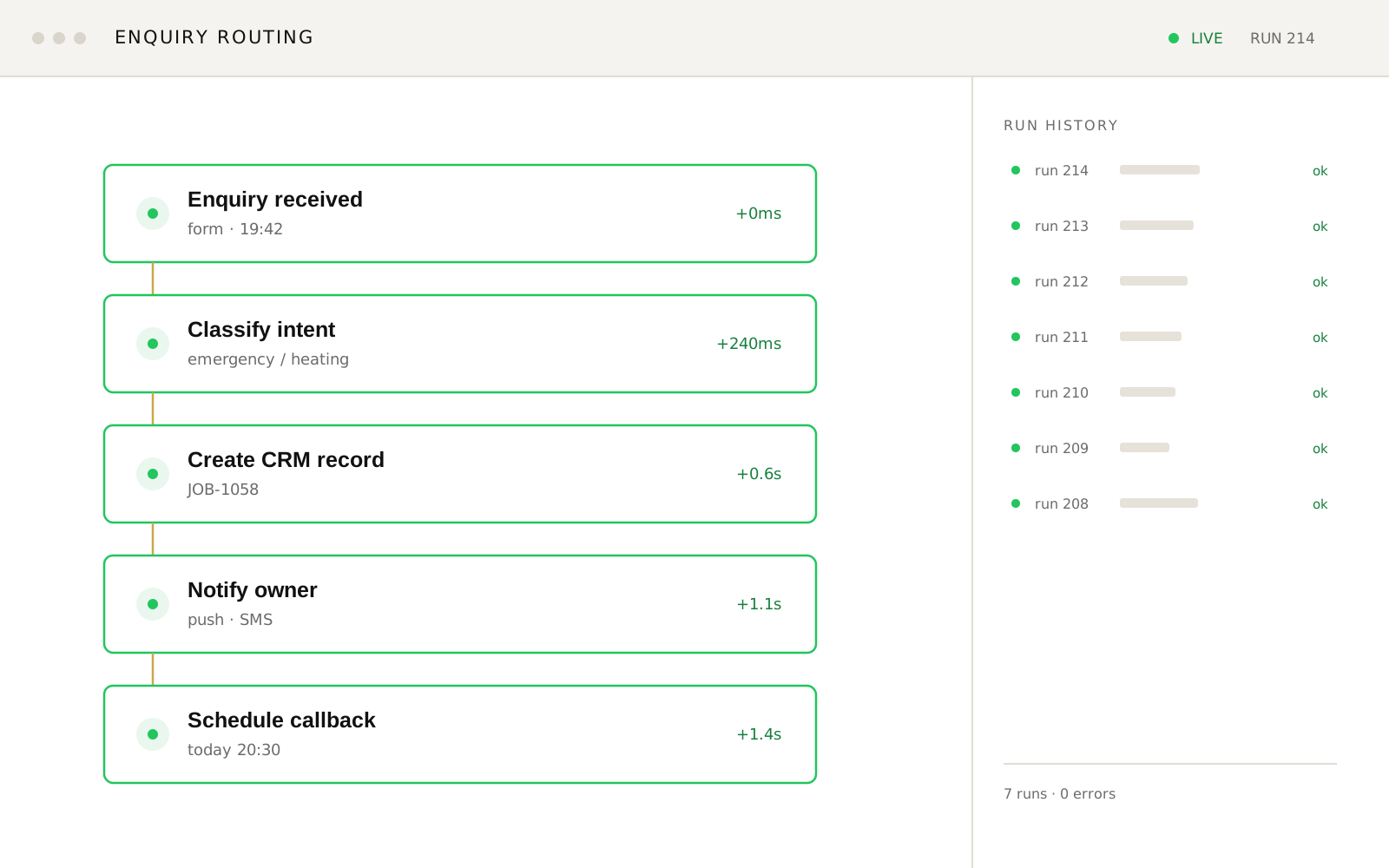
Illustration of an automation scenario canvas: an enquiry passing through classify, record, notify and schedule steps, with its run history beside it
Automation · Scenario run history The admin running on its own and leaving a record. Every run visible, every failure explained.
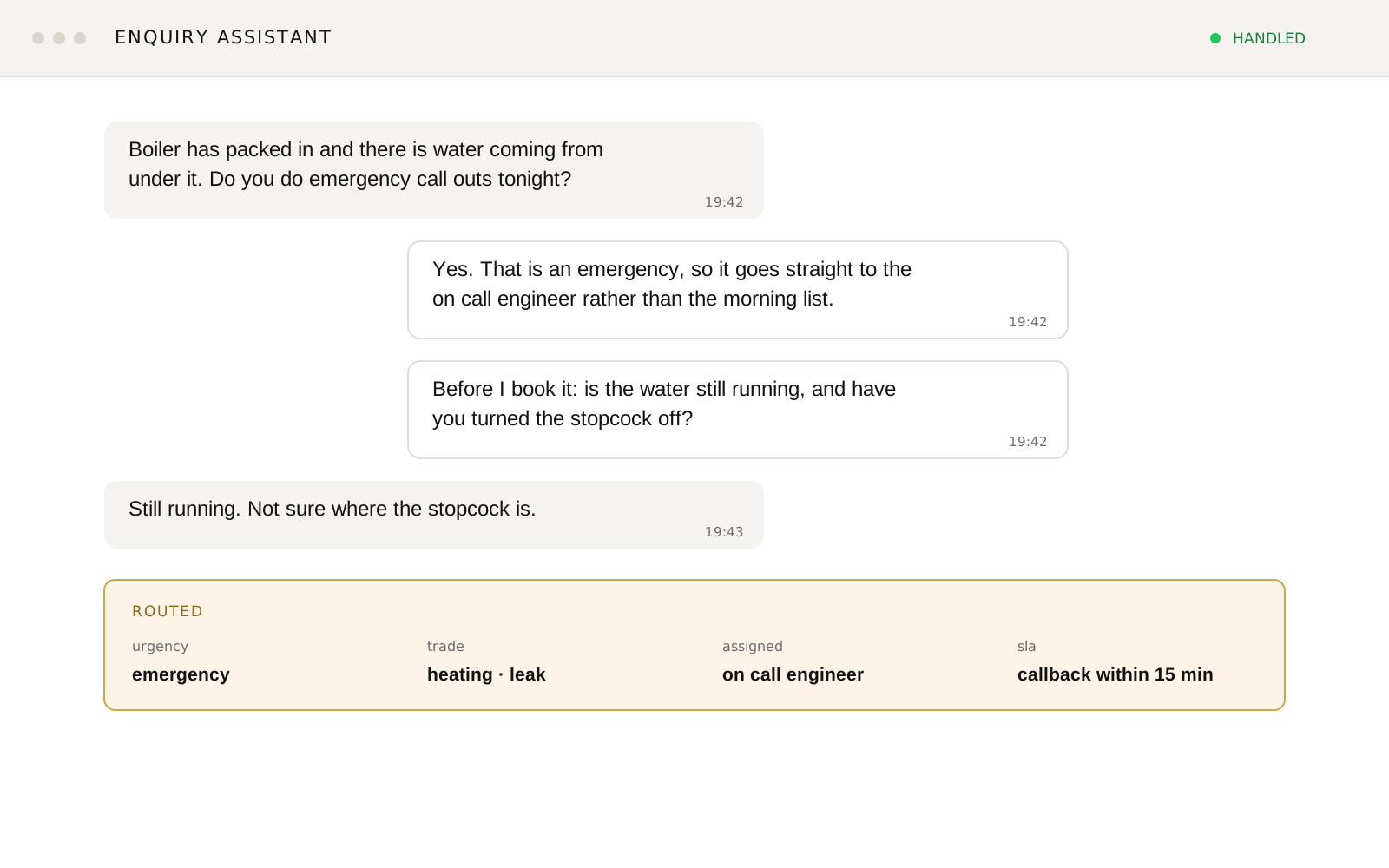
Illustration of an AI assistant transcript: reading an enquiry, grading it as an emergency and routing it to the on call engineer
AI · Qualification transcript An enquiry read, graded and routed the moment it arrives, including the ones that land at 9pm.
Why not just more software

What a custom build gives you that off-the-shelf can’t.

Good software already exists, and when it fits your operation I will say so on the call. The case for building is what happens when it doesn’t.

Your data model, not theirs

Off-the-shelf tools ask you to describe your business in their fields, and the parts that don’t fit fall out of the record. A custom build starts from how a job actually moves through your operation and models exactly that.

No per-seat pricing

Subscription software meters your headcount. A built system doesn’t: it is yours, and adding the next person is an account, not an upgrade.

No features you pay to ignore

Most CRM subscriptions are a hundred features wrapped around the six you actually use. You get those six, done properly, and nothing standing between your team and the next job.

No retraining the whole team

The tool bends to the operation, not the other way round. If your fitters live on their phones and your office lives in a browser, that is how it gets built.

Inside a build

What I typically build.

Every system is scoped around one operation, but the same parts come up again and again. This is what they usually are.

Job and lead pipeline

Every enquiry and every live job on one board, each with an owner and a next action. Nothing enters the business without landing somewhere.

Client records with full history

One record per client, with every job, quote, message and invoice against it. The whole story in one place instead of four.

Quoting and invoicing hooks

Quotes raised from the record and invoices triggered when the work completes, wired into the tools you already bill from.

Team task assignment

Work handed out with a name and a date on it. Everyone opens the same board in the morning and knows what is theirs.

Document filing

Certificates, photos, signed quotes and job sheets filed against the job as they arrive, and findable in seconds two years later.

Dashboards that answer real questions

What is coming in, what is stuck and what got invoiced this month. The questions you actually ask, answered without exporting anything.

The honest comparison

Build, buy, or leave it alone.

You are not choosing between me and an agency. You are choosing between building, buying more software and doing nothing. All three are real options, so here they are, played straight.

Do nothing

Stay on the spreadsheet

Genuinely right while volume is low and one person holds the whole picture in their head. A spreadsheet is free, familiar and endlessly flexible, and I will not talk you out of one that is still working.

Where it breaks: the day two people edit at once, the week that one person is away, and every hour spent retyping what the sheet already knows.

Buy

Take an off-the-shelf CRM

Right when a mainstream tool matches the way you work closely enough that your team will actually live in it. The products are mature, the start is instant, and if this is your answer I will tell you so on the call.

Where it breaks: the workflow that doesn’t fit gets forced into someone else’s fields, adoption quietly dies, and the subscription keeps renewing either way.

Build

Have it built around the workflow

Right when the workflow is the business: jobs move in a way no template quite matches, and the team needs one place that agrees with reality. You own the result outright, and it only does what your operation needs.

Where it breaks: it costs more up front than a subscription, and it needs a builder who takes time to understand the whole operation before building anything. That is the trade, and it is exactly the work I do.

Every build is scoped and priced individually, because it depends on what your workflow actually needs. The discovery call is where that gets nailed down, and you get a fixed written price before any work starts.

Working Order

From first call to handover.

Every build runs the same six stages, so you always know which one you are in. Each has something you can hold me to.

  1. 01

    Enquire

    You tell me what is breaking and what it is costing you. Email, WhatsApp or the form, whichever is quickest.

  2. 02

    Discovery call

    Twenty minutes on how the operation actually runs, where the hours go and what to fix first. You leave with a clear view either way.

  3. 03

    Proposal

    A fixed written scope and price before any work starts. What gets built, what it does, and when you will have it.

  4. 04

    Build

    I design and build the system, with a staging link and regular check-ins, so you watch it take shape instead of waiting for a reveal.

  5. 05

    Review and revisions

    You and the team work it hard and tell me what is wrong. Two rounds of revisions are included in every project.

  6. 06

    Launch and handover

    Full handover documentation and a walkthrough at launch. Every account stays in your name, and you own everything that gets built.

Start here

Tell me what the spreadsheet is costing you.

Describe how a job moves through your business today. I will tell you what I would build first, or whether you should build anything at all.

20 minutes. You leave with a clear view of what to build first, whether you hire me or not.

I reply to every enquiry personally within one working day. If I can’t help, I’ll say so and point you at someone who can.

Book a 20-minute call
WhatsApp me