Custom CRMs & internal tools
Your records live in four places and none of them agree.
One system that holds the whole operation, built around how a job actually moves through your business.
Systems →
Custom CRMs and internal tools. Automation that handles the admin nobody has time for. AI assistants that qualify, route and act. And when the front door is the problem, the website too. I’m Daniel. I do the thinking and the building, start to finish.
20 minutes. You leave with a clear view of what to build first, whether you hire me or not.
One live client site you can go and use. Working systems, including the assistant running on this page. Three demo builds, one trade each. Every one of them is labelled as exactly what it is.
Live. Ran 14ms ago · 3 actions · 0 errors
You talk to me, every time. No account manager, no handover to somebody you have not met.
Fixed written scope and price before any work starts. You approve it before I open an editor.
You own everything that gets built. The code, the accounts, the workflows and the data.
Full handover documentation and a walkthrough at launch, so the system is not trapped in my head.
Most people come to me with one of three things going wrong: leads leaking, admin drowning, or systems that don’t talk to each other. The call decides which we fix first. Sometimes that’s a CRM. Sometimes it’s automation. Occasionally it really is the website.
Your records live in four places and none of them agree.
One system that holds the whole operation, built around how a job actually moves through your business.
Systems →The same information gets retyped three times a day.
The admin runs on its own, leaves a record of every run, and stops being somebody’s second job.
Automation →Enquiries arrive at 9pm and get answered at 11am.
Assistants that read what came in, grade it, answer the easy part and route the rest to the right person.
AI →The front door is where you’re losing them.
A site built to start the workflow: the enquiry lands in the system and the follow-up begins without you.
Websites →Three illustrations of the patterns I build, drawn rather than screenshotted, because no client has agreed to have their live system published here and I am not going to invent one. On the call I screen share the real thing.
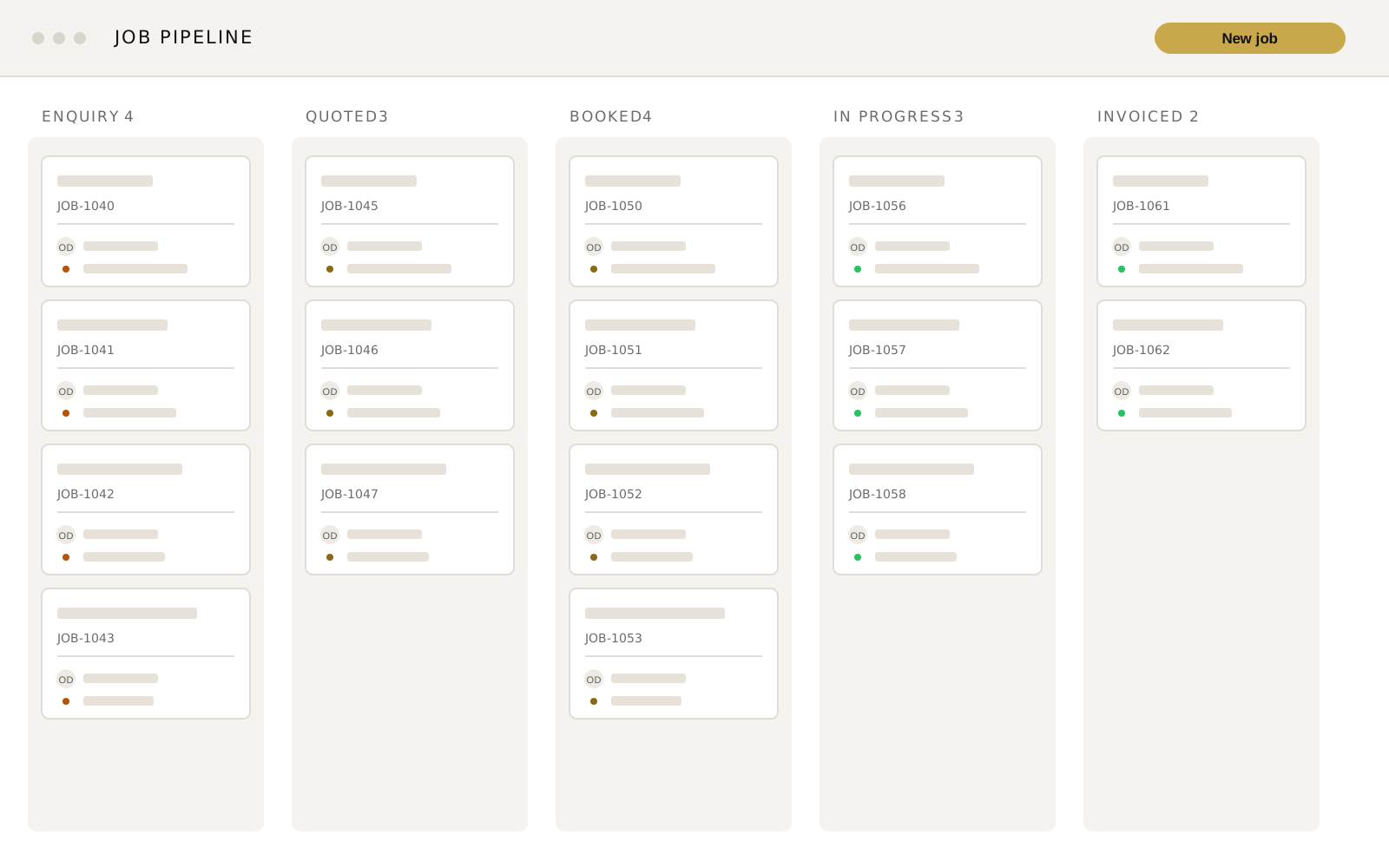
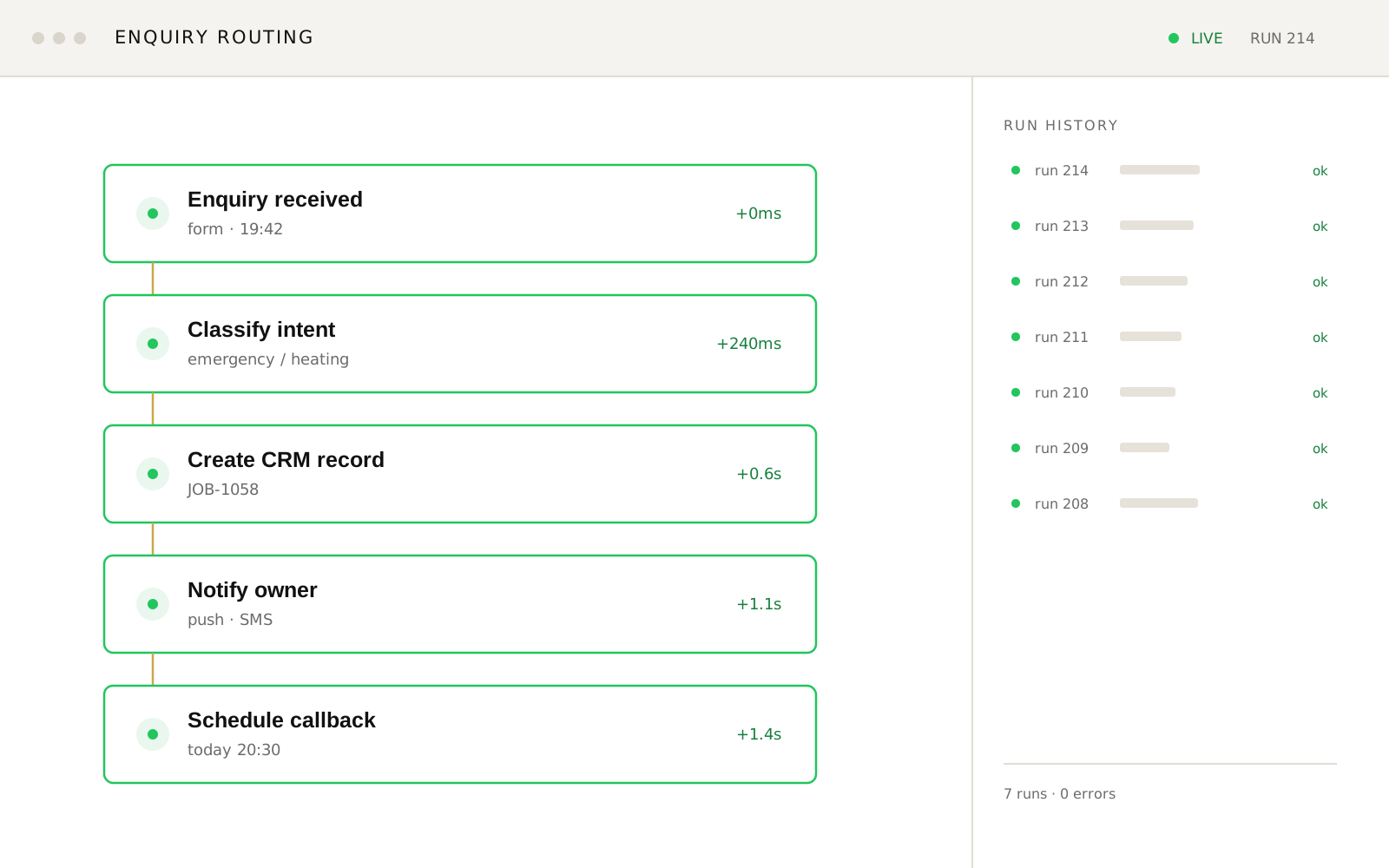
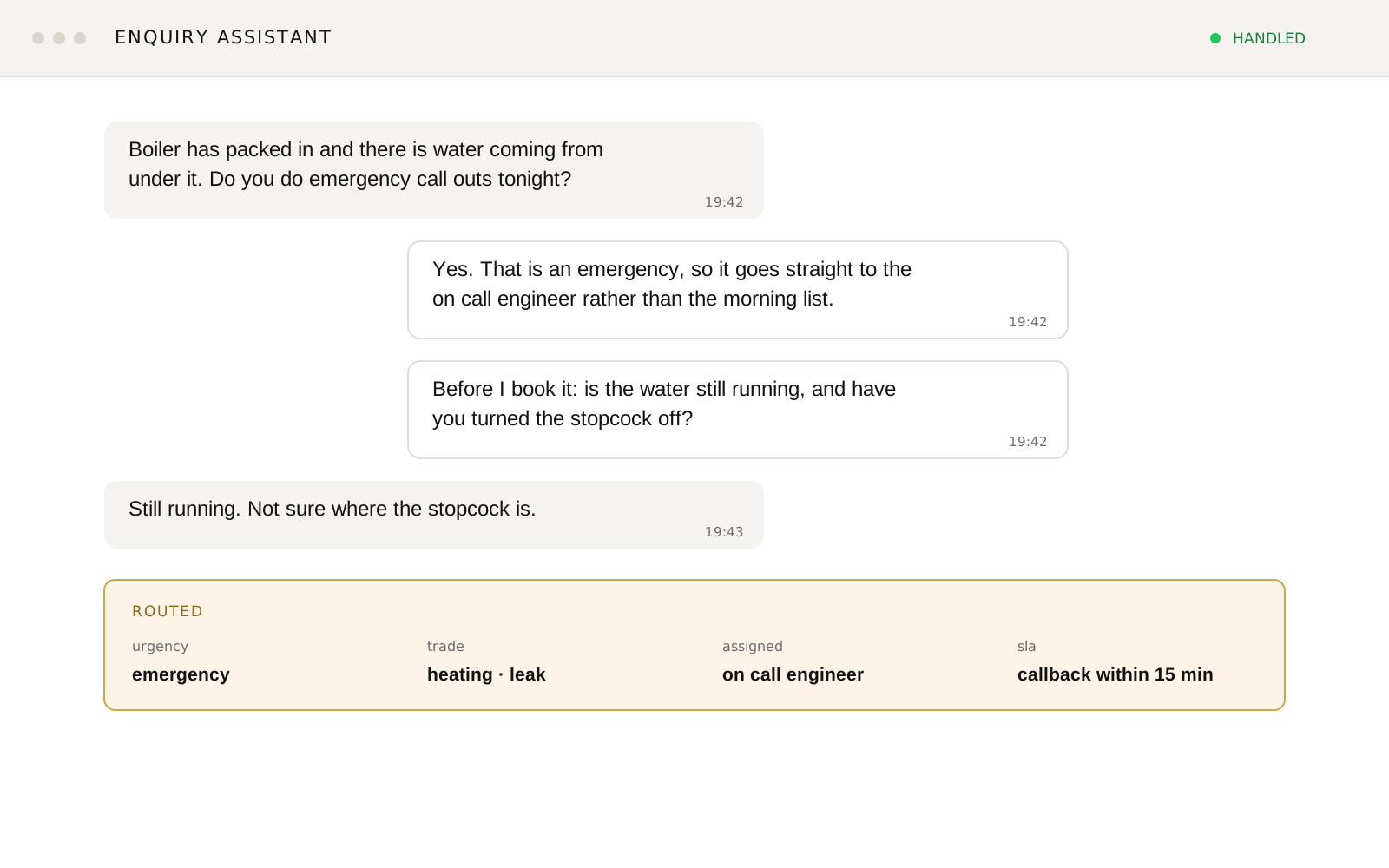
The one project on this site that belongs to a real business. It is live, they use it, and you can judge it the way one of their clients would.

A working salon whose site didn’t reflect the standard of the work, and didn’t win bookings. The website sat outside the process instead of starting it.
A hand-coded replacement designed around the thing that pays the bills: the booking enquiry. Service and bridal pages that answer the questions clients actually ring up to ask, and a clear path to book on every screen.
It went live and the salon runs on it. There was no measured baseline before the rebuild, so I’m not going to quote you a number I can’t stand behind. The full write-up is below, including the one thing I’d do differently.

I build the systems businesses run on: custom CRMs and internal tools, the automation that handles the admin nobody has time for, and AI assistants that read an enquiry and act on it. One person, first call to handover. The person who scopes it is the person who builds it and the person who has to explain it to you afterwards.
Most businesses I meet aren’t stuck because they picked the wrong software. They’re stuck because the operation lives in people’s heads, and every new customer costs somebody twenty minutes of retyping. That is a system problem, and it doesn’t get solved by another subscription. I don’t build anything I can’t explain to the person who has to live with it.
UK-based. I work with businesses across the country, entirely remotely.
Five questions about how an enquiry actually travels through your business. I draw your flow as you answer, and mark the points where leads and hours go missing. Nothing to install, no account to make.
Tell me how an enquiry travels through your business right now, from the first call or form to the job being invoiced. I map it, show you where leads and hours are leaking, and tell you what I would automate first.
It comes back as a short written map. If the answer is that you do not need me, I will say so.
1 of 5
When an enquiry comes in, where does it land first?
Who sees it, and how fast?
Where does it get recorded?
What happens if nobody replies within a day?
One line is plenty. Quoting, chasing, rescheduling, retyping the same details into two systems, whatever it actually is.
I'll write this up properly. Your whole flow, where the hours go, and what I would automate first, sent over as a short written map.
Sent. I've got your map and I'll come back to you personally within one working day.
Rather talk it through than type it out?
20 minutes. You leave with a clear view of what to build first, whether you hire me or not.
Your flow Drawn as you answer. Anything leaking is marked and named.
EATS THE WEEK
Three self-initiated builds on my own subdomains, one trade each. None of them is a client. Each was made to show what a front door looks like when it is designed to start a workflow rather than sit in a search result, and all three are live to click through.

A demo build for a plumbing business. Self-initiated and not commissioned: it exists to show what the build looks like when it is made for that trade rather than dropped onto a template.
plumbersdemo.oduex.workers.dev
View the demo →
A demo build for a salon, made to show the same standard applied to an appointment business. Nobody commissioned it and no salon named on it is a client of mine.
salondemo.oduex.workers.dev
View the demo →
A demo build for a gardening and landscaping business. Same standard, a different trade, and like the other two it belongs to nobody but me.
gardenerdemo.oduex.workers.dev
View the demo →Every project runs the same six stages, and each one has something you can hold me to. I call it the six-stage build for one reason: you should always know which stage you are in without having to ask.
You tell me what is breaking and what it is costing you. Email, WhatsApp or the form, whichever is quickest.
Twenty minutes on how the operation actually runs, where the hours go and what to fix first. You leave with a clear view either way.
A fixed written scope and price before any work starts. What gets built, what it does, and when you will have it.
I design and build it, with a staging link and regular check-ins, so you watch it take shape instead of waiting for a reveal.
You and the team work it hard and tell me what is wrong. Two rounds of revisions are included in every project.
Full handover documentation and a walkthrough at launch. Every account stays in your name, and you own everything that gets built.
Every build is scoped and priced individually, because it depends on what your workflow actually needs. The discovery call is where that gets nailed down, and you get a fixed written price before any work starts.
Turning work away is cheaper for both of us than finding out three weeks in. If you recognise yourself here, we probably should not start.
A build like this needs access to the systems your business runs on. Here is exactly what that means, in the order you would ask it.
Named, so you can check I know what I am talking about before you spend an hour on a call.
You get the code, the accounts and the documentation as the build goes, not in one drop at the end, so the work is never trapped with me. If I am ill or away, you hear it from me the same day with a revised date rather than silence. And if something is genuinely time-critical, I will tell you up front whether one person is the right risk for you to take.
Everything lives in accounts you own, with providers you can name. I ask for the access the job needs and nothing beyond it, I will sign an NDA if you want one, and my access comes off the day the project ends. Where a build handles personal data, we agree in writing who controls it and who processes it before anything is connected.
No. You own the code, the accounts and the workflows, and everything is exportable. Handover includes documentation and a walkthrough so another developer can pick it up without ringing me first. If you want to take it in-house in a year, that is a good outcome, not a betrayal.
That is the most useful call I take. Describe how a job moves through your business (where it lands, who touches it, where it gets written down) and I will tell you which part is worth fixing first. Sometimes the answer is one automation rather than a system. Sometimes it is nothing yet, and I will say so.
UK-based, working with businesses across the UK, entirely remotely. Discovery, build, review and handover all happen over calls and screen shares, which is how this work goes best anyway. The time goes into the build instead of into travel.
It depends on surface area. A single automation is usually days. A custom CRM or an internal tool is usually weeks. You get a date in the written proposal before any work starts, plus a staging link and regular check-ins, so you can watch the date being met rather than take my word for it.
You do not need a spec, a budget or a solution in mind. Describe the part of the week that keeps going wrong and I will tell you what I would build first, or whether you should build anything at all.
20 minutes. You leave with a clear view of what to build first, whether you hire me or not.
The fourth box is the one that matters. The more concretely you describe what is going wrong, the more useful my reply is.
Ask ODUEX
Daniel’s assistant · answers, then routes
I’m the assistant Daniel built for ODUEX. Ask what he builds, how the work runs, or tell me what is going wrong in your business and I’ll tell you where he’d start.
Daniel’s assistant, not Daniel. It can be wrong, and anything that matters he confirms himself. Leave an email and the whole conversation goes to him.